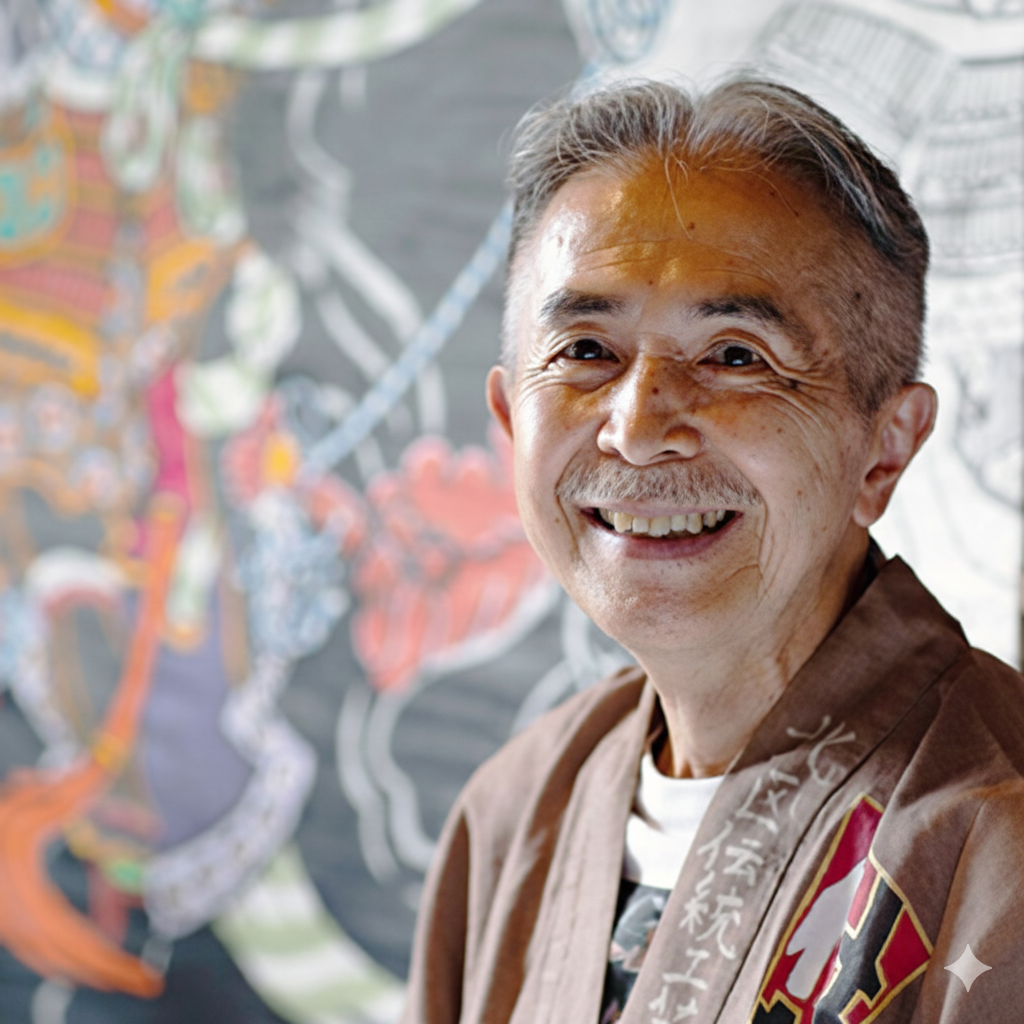
Yasuo Shimura 志村 康夫
北区伝統工芸保存会 会員
凧絵師 / 江戸文字
Member of Kita City Traditional Crafts Preservation Association / Kite Painter / Edo Characters
 北区伝統工芸保存会
北区伝統工芸保存会に所属する凧絵師。
江戸時代から続く伝統的な「江戸文字」と、縁起の良い図柄を描く技術を受け継ぐ。
子供から大人まで楽しめる凧作りワークショップを通じて、手描きの温かさと日本文化の魅力を伝え続けている。
力強くも愛らしいその画風は、見る人を自然と笑顔にさせる。
A kite painter belonging to the Kita City Traditional Crafts Preservation Association.
He inherits the traditional "Edo characters" that have continued since the Edo period and the technique of drawing auspicious patterns. Through kite-making workshops enjoyable for both children and adults, he continues to convey the warmth of hand-drawing and the charm of Japanese culture. His powerful yet adorable artistic style naturally makes viewers smile.
空に舞う、
江戸の粋と願い。Edo's style and wishes dancing in the sky.
凧には古くから、子供の健やかな成長や魔除けの意味が込められています。
私が描くのは、単なる絵ではなく、そうした「願い」そのものです。墨の濃淡と鮮やかな色彩で描かれる武者絵や歌舞伎絵、そして独特の筆致で書かれる江戸文字。それらが大空高く舞い上がる姿には、いつの時代も変わらない高揚感があります。
アトリエでは、初めての方でも自由に筆を走らせる楽しさを体験していただきたいですね。
Since ancient times, kites have been imbued with wishes for the healthy growth of children and protection against evil.
What I draw is not just a picture, but those "wishes" themselves. Warrior pictures and Kabuki pictures drawn with shades of ink and vivid colors, and Edo characters written with unique brushstrokes. There is an uplifting feeling that never changes in any era when they soar high in the sky.
At the atelier, I would like beginners to experience the joy of letting their brushes run freely.